Greening of Eco-Link @ BKE

Greening of Eco-Link @ BKE
A Safe Passage for Wildlife


The completed Eco Link spanning across the BKE

Way back in 1986, when the roads engineers of the then Public Works Department designed the Bukit Timah Expressway (or BKE as we acronym-mad Singaporeans know it by), their emphasis was to create an efficient transport link from the Causeway to downtown Singapore. Back then, probably the most efficient route took the expressway right through the Central Catchment, splitting the Bukit Timah Nature Reserve from the rest of the Central Catchment Nature Reserve.


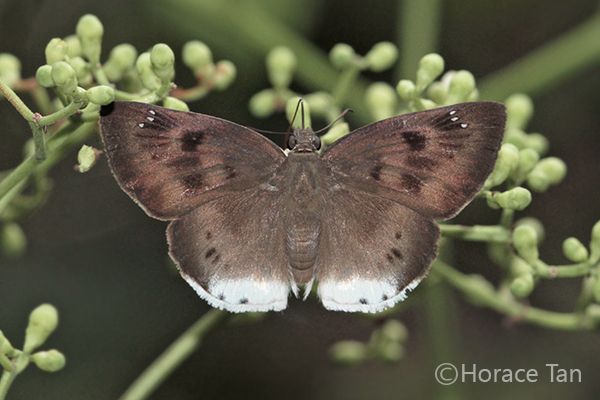
Elbowed Pierrot (Caleta elna elvira) one of the species observed 

Over the decades that passed, nature observers lamented the fragmentation of the two major high biodiversity nature areas by the BKE. Animals separated by the BKE remained on the two sides and were unable to cross the expressway without the risk of being killed by vehicles. The expressway became an insurmountable barrier.


Lesser Harlequin (Laxita thuisto thuisto)

In 2005, the nature community and the government authorities mooted the idea of a nature or green corridor to re-connect BTNR to the CCNR. After some debate and feasibility studies, the location selected for this biodiversity-bridge was confirmed. It took some time for the realisation of this Eco-Link as there were issues like design, budget, effectiveness and environmental impact of the link to be dealt with.


After further delays, the contract was finally awarded to local contractor Eng Lee Engineering for a contract sum of $11.8M. The Ground Breaking Ceremony for the Eco Link was held on 30 Jul 2011. Today, slightly over two years after work commenced on the Eco Link, I attended the Greening of the completed Eco Link.


Group Photo at the Tree Planting site (via Twitter by ©Debby Ng)

This was basically an event to celebrate the completion of the biodiversity link with a tree-planting ceremony involving the nature community. The event was graced by the Minister of State for National Development, Mr Desmond Lee.


The morning started with an imminent threat of another thunderstorm. The NEA weather radar showed a massive front coming in from Sumatra, and it had begun raining cats and dogs in parts of Singapore. However, the nature community, being a determined bunch, braved the prospects of planting trees in the heavy rain!


When I arrived at the meeting point, I was pleasantly surprised to see that a decent crowd had already made their way to the Dairy Farm area. The dark rain clouds were also beginning to clear up, and it looked like the event was a go!


MOS Desmond Lee hard at work digging the tree hole

The guests were ferried to the Eco Link by coaches, and before long, the group made its way to the top of the Eco Link, led by MOS Desmond Lee. After the traditional group photo, everyone got busy with the tree planting. MOS was even game enough to plant more than one!


As everyone took in the sights around the Eco Link and the speeding vehicles on the BKE below, I could imagine that this "narrow" 50m wide link could indeed be a bridge across which animals can use to move safely between BTNR and CCNR.


I was also told that the Eco Link will not be opened to the general public and will be kept inaccessible so that the animals that may use it will not be disturbed by human presence. There was also concerns that poachers may also use it as a convenient means to capture their prey.


MOS Desmond Lee entertaining the crowd with his handling of the Oriental Whip Snake

Very soon, all the trees were planted, and the group made its way down to the exhibition area and our much-needed refreshments. As if on demand, a couple of snakes showed up and got the attention of the group, including our Guest of Honour. As it was still cool and cloudy, I didn't manage to spot any butterflies in the area.


As for ButterflyCircle's involvement, members had earlier conducted a pre-construction survey in April 2011 in the area. On that single day alone, a total of 54 species of butterflies were recorded. A few rarities like the Lesser Harlequin, Malay Tailed Judy, Indigo Flash were spotted. After the contractors vacate the site and the vegetation recovers on the Eco Link and the surrounding forests, another survey will be conducted to ascertain the butterfly count.


So there you have it, a biodiversity bridge over an expressway, just for nature. There were concerns that the Eco Link would not be effective or is too narrow for animals to want to use it. Will all this effort will be in vain? To me, it is a little effort that may go a long way in trying to bridge the fragmented nature reserves. These reserves are important in the sense that the forest-dependent butterfly species are dependent on the preservation of this habitat. Although the Eco Link itself may not be directly beneficial to butterflies, since they can easily fly across the BKE, the selection of plants and regeneration of habitats across the bridge may help butterfly populations to spread between the two nature reserves.


An exhibition showing the flora and fauna of the Nature Reserves

The Central Catchment and Bukit Timah Nature Reserves are the last remaining remnants of a once awesome primary forest that covered Singapore. These are certainly worth preserving as our natural heritage, and as a home to an amazing diverse spectrum of flora and fauna. The controversy that surrounds the construction of an underground MRT line cutting across the southern part of the Central Catchment Nature Reserve in the MacRitchie Reservoir area stems primarily from the critical need to protect this precious 'green heart' that is home to an awesome biodiversity. That debate is still ongoing, and it will be another story for another time on this blog.

Text & Photos by Khew SK : Group Photo courtesy of Debby Ng

References and Past Articles about the Eco Link


  • From WildSingapore : http://wildsingaporenews.blogspot.sg/2010/12/singapore-bukit-timah-eco-bridge-to.html
  • From the Biology Refugia : http://biologyrefugia.blogspot.sg/2009/09/ecological-corridor-for-bukit-timah-and.html
  • From SGLinks : http://sglinks.com/pages/1202944-eco-link-bke-links-nature-reserves
  • From IYB 2010 : http://iyb2010singapore.blogspot.sg/2010/05/bridge-for-biodiversity-eco-link-to.html


List of Butterflies observed during the pre-construction survey on 9 Apr 2011 :

1) Papilio polytes romulus (Common Mormon)
2) Graphium sarpedon luctatius (Common Bluebottle)
3) Chilasa clytia clytia (Common Mime) (caterpillar)
4) Euploea mulciber mulciber (Striped Blue Crow)
5) Leptosia nina malayana (Psyche)
6) Catopsilia pomona pomona (Lemon Emigrant)
7) Eulaceura osteria kumana (Purple Duke)
8) Eurema blanda snelleni (Three-Spot Grass Yellow)
9) Elymnias hypermnestra agina (Common Palmfly)
10) Elymnias panthera panthera (Tawny Palmfly)
11) Mycalesis mineus macromalayana (Dark Brand Bush Brown)
12) Mycalesis perseus cepheus (Dingy Bush Brown)
13) Mycalesis visala phamis (Long Brand Bush Brown)
14) Mycalesis fusca fusca (Malayan Bush Brown)
15) Orsotriaena medus cinerea (Nigger)
16) Ypthima baldus newboldi (Common Five Ring)
17) Ypthima pandocus corticaria (Common Three Ring)
18) Tanaecia iapis puseda (Horsfield's Baron)
19) Tanaecia pelea pelea (Malay Viscount)
20) Lebadea martha parkeri ( The Knight )
21) Moduza procris milonia (Commander)
22) Hypolimnas anomala anomala (Malayan Eggfly)
23) Athyma nefte subrata (Colour Sergeant)
24) Junonia hedonia ida (Chocolate Pansy)
25) Junonia almana javana (Peacock Pansy)
26) Lasippa tiga siaka (Malayan Lascar)
27) Phaedyma columella singa (Short Banded Sailor)
28) Abisara saturata kausambiodes (Malayan Plum Judy)
29) Abisara savitri savitri(Malay Tailed Judy)
30) Laxita thuisto thuisto ( Lesser Harlequin )
31) Logania marmorata damis (Pale Mottle)
32) Acytolepis puspa lambi (Common Hedge Blue)
33) Caleta elna elvira (Elbowed Pierrot)
34) Eooxylides tharis distanti (Branded Imperial)
35) Iraota rochana boswelliana (Scarce Silverstreak)
36) Surendra vivarna amisena (Acacia Blue)
37) Zizina otis lampa (Lesser Grass Blue)
38) Jamides celeno aelianus (Common Caerulean)
39) Prosotas dubiosa lumpura (Tailless Line Blue)
40) Arhopala centaurus nakula (Centaur Oakblue)
41) Arhopala major major
42) Anthene emolus goberus (Ciliate Blue)
43) Zeltus amasa maximinianus (Fluffy Tit)
44) Rapala varuna orseis (Indigo Flash)
45) Rapala pheretima sequeira (Copper Flash)
46) Hypolycaena erylus teatus (Common Tit)
47) Neopithecops zalmora zalmora ( The Quaker)
48) Pelopidas mathias mathias (Small Branded Swift)
49) Tagiades japetus atticus (Common Snow Flat)
50) Tagiades calligana (Malayan Snow Flat)
51) Hasora badra badra (Common Awl)
52) Iambrix salsala salsala (Chestnut Bob)
53) Potanthus omaha Omaha (Lesser Dart)
54) Taractrocera archias quinta (Yellow Grass Dart)


Down Memory Lane - Small Red Bob

Down Memory Lane
The Small Red Bob (Idmon obliquans obliquans)


This small and rather insignificant skipper was recorded in Singapore by the early authors. It resembles the related species from the genus Iambrix, of which there are two representatives in Singapore - Chestnut Bob and Starry Bob. The Small Red Bob is predominantly dark reddish-brown, with a short orange-red post-discal band on the forewing. It flies mainly along open paths in forested areas and is not uncommon.  It flits from perch to perch and often sunbathes in the usual skipper fashion.


It is likely that the Small Red Bob's caterpillars feed on grasses. It was found in Singapore in the past, but has not been reliably observed over the past 4-5 decades. It may have been overlooked as it is not a particularly spectacular looking butterfly.  But what caused this species to disappear from Singapore? Will it be back here again one day? Or will it remain only in our memories and is gone forever from Singapore?

More Long-tailed Blue adventures

 
This extraordinary year for Long-tailed Blue continues with higher numbers recorded of this rare migratory butterfly than have ever been recorded in Britain before in history. I had just a couple of hours spare yesterday so another trip along the coast where Everlasting Pea was growing, the favoured foodplant of this species, to see if I could find any more butterflies.
Once the weather improved enough I had two definite sightings, one male and one female as well as another possible sighting. I managed a record shot of a male nectaring on the pea flower. I then had to cut my visit short but saw another older male on the return which also allowed some photos.


Butterflies Galore! : Common Palmfly

Butterflies Galore! 
The Common Palmfly (Elymnias hypermnestra agina)

The Common Palmfly is quite widespread in Singapore, and is observed in urban parks and gardens, particularly where its caterpillar host plants (various palms) are cultivated. A favourite host plant is the Yellow Cane Palm (Dypsis lutescens) which is often used as an ornamental palm in home gardens. The butterfly has a slow flight, although it is very skittish and not easily approached.

The upperside of the Common Palmfly features dark bluish black forewings with light blue submarginal spots and reddish purple hindwings. The underside is reddish brown with light grey striations. There is usually a white spot at the costa of the hindwing, although in some individuals, this spot can be missing. This shot of the Common Palmfly was taken by young ButterflyCircle member Jerome Chua.

Autumn Moths

 
Even with all the excitement last week with the rare Long-tailed Blue butterflies I still managed to get the moth trap out a few times. For most of the week the weather was favourable with light winds, although the overnight temperatures were a little lower than they had been.
 
Despite this I still caught a few new species and also some nice individuals.
 
 
The Black Rustic.
 
 
Dark Sword-grass

 
and the Sallow


All these moths are quite common but were all very fresh individuals. Now its waiting for the wind to die down before the next attempt.

Life History of the Large Snow Flat

Life History of the Large Snow Flat (Tagiades gana gana)


Butterfly Biodata:
Genus: Tagiades Hübner, 1819
Species: gana Moore, 1866
Sub-species: gana Moore, 1866
Wingspan of Adult Butterfly: 38-45mm
Caterpillar Local Host Plants: Dioscorea pyrifolia (Dioscoreaceae), Dioscorea orbiculata var. tenuifolia (Dioscoreaceae) and other Dioscorea spp.


Physical Description of Adult Butterfly:
Above, the wings are brown with obscure post-discal and discal spots in darker brown. On the forewing, there are three white hyaline sub-apical spots in spaces 6,7,8. On the hindwing, the tornal area is whitened and there are black marginal spots at the end of veins 2, 3 and 4, and in some specimens, another spot at the end of vein 1b. Below, the wings are similarly marked as per above but with the whitened area on the hindwing extended to the basal area and almost to the costal margin.


Field Observations of Butterfly Behaviour:  
This species is common in Singapore and can be found in the forested areas in the Central Catchment and Bukit Timah nature reserves, and several other sites across the island. The adults are rapid flyers and are more active in the cooler hours of the day. As is the case for the other Tagiades species, the adults have the habit of perching on the underside of a leaf between flights, and with wings opened flat. The adults are often seen visiting flowers for nectar.


Early Stages:
Several Dioscorea spp. have been found to be the local host plants for the Large Snow Flat. Only two of them have been formally identified. The caterpillars of the Large Snow Flat feed on leaves of the host plant. When not feeding, the caterpillars seek safety and concealment in a leaf shelter formed by cutting and folding a leaf fragment along the edge of the leaf.

Local host plant #1: Dioscorea pyrifolia.

Local host plant #2: Dioscorea orbiculata var. tenuifolia.

Leaf shelter of a 2nd instar caterpillar of the Large Snow Flat.

A mating pair of the Large Snow Flat.

The eggs of the Large Snow Flat are laid singly on the underside of a leaf of the host plant. The pale yellowish is hemispherical with surface marked with longitudinal ridges running from the pole to the rim of the base. The egg is well concealed in a mass of fine whitish to pale yellowish setae deposited by the mother butterfly. Each egg has a diameter of about 0.9mm.

Two views of an egg of the Large Snow Flat.

Left: a maturing egg; Right : a mature egg with the polar portion of the egg shell already nibbled away.

The egg takes about 5 days to hatch. The young caterpillar emerges by eating away the polar portion of the egg shell. The rest of the egg shell is not eaten by the newly hatched which is about 3mm in length. The dull orange body is reddish laterally and feature a few moderately long setae at its anal end. The head capsule is black in color, and there is a black collar mark on the dorsum of the prothorax.

Two views of a 1st instar caterpillar, early in this stage, length: 3mm.

The newly hatched makes its way to the leaf edge to construct its very first leaf shelter. It ventures out of the shelter from time to time to feed on the leaf lamina in the vicinity. As the caterpillar grows, the body assumes a green undertone. After reaching about 5mm in about 3 days, the caterpillar moults to the 2nd instar.

Two views of a 1st instar caterpillar, length: 4.5mm.

Two views of a late 1st instar caterpillar, dormant prior to its moult.

The body of the 2nd instar caterpillar is initially dull orange but becoming more yellowish as it grows in this instar. The lateral reddish coloration also dissipates in the same time frame. There are numerous, obscure and whitish specks carpeting the body surface. The black colar mark on the prothorax is still present but has become obscure. The dark reddish brown head is broadened sideways to two rounded tips at the upper end. This instar lasts about 4 days with the body length reaching about 8mm.

Two views of a 2nd instar caterpillar, early in this stage, length: 4.2mm.

Two views of a 2nd instar caterpillar, length: 5.8mm.

A late 2nd instar caterpillar, dormant prior to its moult, length: 8mm.

The 3rd instar caterpillar closely resembles the 2nd instar caterpillar. The head capsule is still dark reddish brown but broader sideways and with the two raised points more pronounced, resulting in a heart-shaped outline. The whitish/yellowish specks on the body are now more prominent. This instar takes about 5 days to complete with body length reaching about 12mm.

Two views of a 3rd instar caterpillar, early in this stage, length: 7.5mm.

Two views of a 3rd instar caterpillar, length: 12mm.

Two views of a late 3rd instar caterpillar, dormant prior to its moult.

The 4th instar caterpillar is little changed from the 3rd instar. The yellowish green body is covered with numerous, yellowish specks, and there is hardly any hint of a dark collar mark on the prothorax. This instar lasts about 6 days with body length reaching about 21-22mm.

Two views of a 4th instar caterpillar, early in this stage, length: 12.5mm.

Two views of a 4th instar caterpillar, late in this stage, length: 22mm.

Two views of a late 4th instar caterpillar, dormant prior to its moult.

The 5th instar caterpillar has similar body markings as in the 4th instar. The yellow coloration of the body ground colour and that of the numerous specks is more mellow than in the earlier instar. This final instar lasts for about 8-9 days, and the body length reaches up to 33-40mm.

Two views of a 5th instar caterpillar, early in this stage, length: 22mm.

Two views of a 5th instar caterpillar, length:30mm.

On the last day of 5th instar, the body decolorises to an iridescent shade of pink. The caterpillar ceases feeding and remains in its leaf shelter. In it, the pre-pupatory larva prepares for the pupal phase with a series of silk construction work with the main pieces being a silk girdle across the dorsum of its early abdominal segments, and a short and thickened transverse silk band on the substrate at its posterior end. Pupation takes place about 1 day later.

Two views of a 5th instar caterpillar, late in this stage, length:28mm.

Top: A pre-pupa of the Large Snow Flat secured with silk girdle in its shelter. Bottom: The fresh pupa, note the change to cremastral attachment at the posterior end.

The girdled pupa is secured with its cremaster attached to the short transverse band on the substrate. It has a short thorax, a rather long abdomen, a pointed rostrum and two small ear-like appendages at the leading edge of the mesothorax. The body is pale beige brown dotted with numerous brown to reddish brown spots. Unlike other Tagiades spp., the pupa doe snot have white triangular patches on the sides of its body. Length of pupae: 24-25mm.

Two views of a pupa of the Large Snow Flat.

Left: Frontal view of the anterior of a pupa of the Large Snow Flat. Right: Close-up view of the cremastral attachment.

After about 8 days of development, the pupal turns dark as the development within the pupal case comes to an end.  The following day, the adult butterfly emerges from the pupal case.

Two views of a mature pupa of the Large Snow Flat .

A newly eclosed adult of the Large Snow Flat .

References:
  • [C&P4] The Butterflies of The Malay Peninsula, A.S. Corbet and H.M. Pendlebury, 4th Edition, Malayan Nature Society.
  • Butterflies of Thailand, Pisuth Ek-Amnuay, 2nd Edition, 2012.
  • A Field Guide to the Butterflies of Singapore, Khew S.K., Ink On Paper Communications, 2010.
Text by Horace Tan, Photos by Antonio Giudici, Mark Wong, Federick Ho, Chng CK, Loke PF, Nelson Ong, Sunny Chir, Khew SK and Horace Tan